

The story so far
The Hive will be built on the grounds of Quince Honey Farm – a working honey farm first established in 1949, now in its third generation of beekeepers.
1949
Quince Honey Farm began with George Wallace and two hives of bees at Quince Hill near Bishop’s Nympton, South Molton
1958
Honey production had increased year on year. George and wife, Kate, needed bigger premises and wanted somewhere they could open a honey shop, the family moved into the old school at East Street in South Molton.
The business grew and their sons joined the team.
An idea brewed about another element that could be added- bee tourism. But a new premises would be needed.
1978
The family purchased the old Workhouse in North Road South Molton. Plenty of space to expand and allow Paddy Wallace to build and display what would become a world renowned exhibition of honeybees with mechanically operated observation hives giving thousands of tourists the opportunity to see the inner workings of a beehive in complete safety.
With Paddy’s wife Jean on the team masses of new products were added to create a number of ranges of local products for sale, which are a staple of the business today.
40 years at this site was a rollercoaster of successes, recessions and a by pass. The third generation was born and the first generation passed.
The enthusiasm continued with third generation brothers Ian and Andrew and the next need was to demonstrate the whole story of honey production from plant to jar. The brownfield workhouse site would not do.
2019
The business moved to West Ford, South Molton. Near the link road and 54 acres of space to create what would become the world’s first nectar gardens, grow crops for bees and add the outdoor spaces for learning that were essential to tell the whole story.
The relocation was a big project for us and we worked with Will and Ian Friend of Wedgewood Groundworks to make it happen.
There were some heavy set backs in the first few years at West Ford but the thousands of trees, shrubs, herbs and flowers we planted kept growing through it all and the story was told to thousands more people.
Many of these people were inspired to develop their own natural spaces and requested to buy the plants they had been shown. An idea for the next step started to germinate.
2026
The next phase will be to add a garden centre and other businesses useful to the local area. This idea has been driven by two interconnected forces – customers’ requests for the materials needed to put into practice what inspired them at Quince and a desire to build a beautiful building that fitted the landscape.
We are proud to be joining forces again with Will and Ian Friend, this time as partners on The Hive development.
A working
honey farm
George Wallace first became obsessed with bees as a soldier, after reading a book about beekeeping towards the end of his service in 1949. After moving South with two hives, an inexorable work ethic and a wild dream, he set up Quince Honey Farm. We’ve been a working honey farm ever since.
A family
legacy
For the Wallaces, beekeeping is a family affair. That’s why both George’s sons, Paddy and Jon, his daughter-in-law Jean, and grandson Ian, have all joined the family business. With ambitions that echo that of his father and grandfather, Ian is the third generation of Wallaces to sit at the helm of Quince Honey Farm and now The Hive too, with partners Will and Ian Friend.
A unique
destination
For years now, Quince Honey Farm hasn’t just been known for its delicious honey (though we are the proud holders of several Taste of the West awards) but the unique, educational attraction that we’ve become. We’re proud to offer a place for people to come and learn about bees and beekeeping – and The Hive is very much intended to follow in those footsteps.
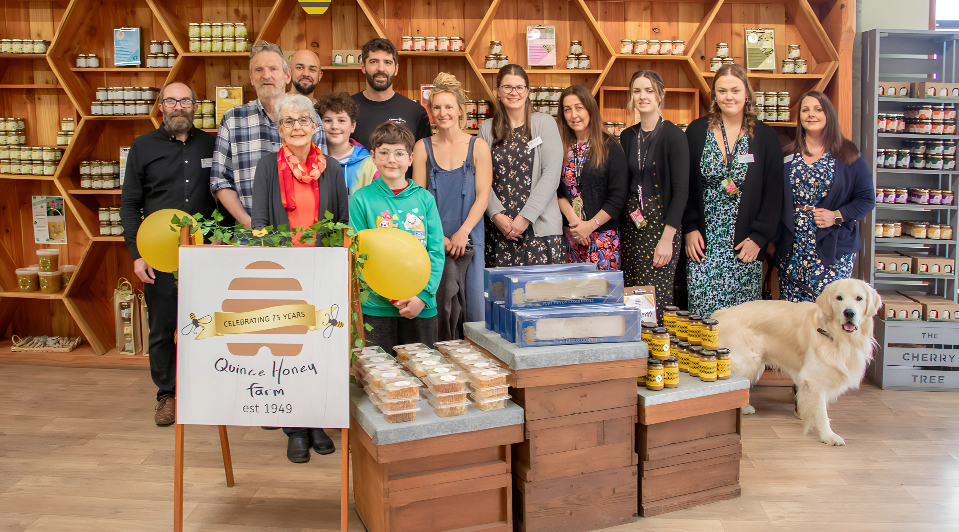
The Team
The Underpinning Ethos
A passion for our planet underpins everything we do.
From teaching people practical environmental skills, to simply giving them a space to get outdoors, to boosting biodiversity with our bees – the goal is always to respect and protect our natural world, and the community of people who exist within it. That’s why we support local businesses with our supply chain and bring people together with pop-up events.